Sexting vs Video Chat: Privacy, Safe Sexting and How to Spot Sextortion
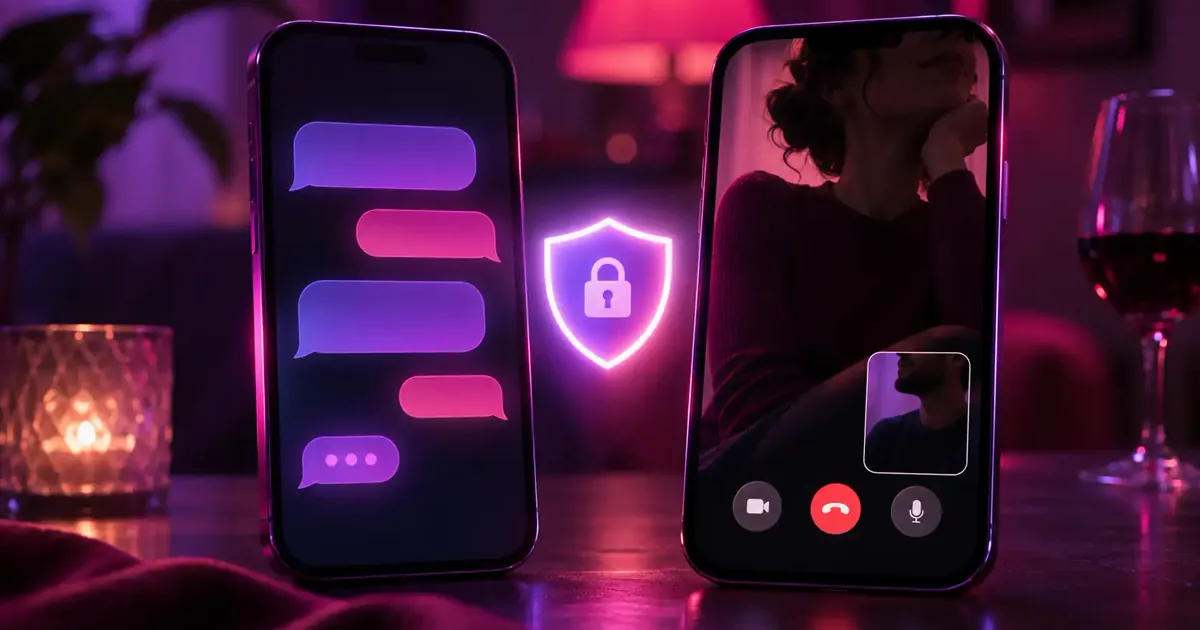
Sexting vs video chat is a real choice with real consequences for your privacy. Texts and photos are files that can be saved, forwarded and kept forever. Live video feels more fleeting, but it can be recorded too. This guide compares the two, explains safe sexting habits that actually reduce risk, and shows you how to recognize sextortion and what to do if someone tries it on you. Everything here is for consenting adults 18 and over.
Our ranking
- 1
Instacams Our top pick
Our top pick: private 1-on-1 video chat between men and women, with live translation.
- 2
Private 1-on-1 cam roulette for adults: men meet women, messages auto-translated.
- 3
Private adult cam to cam chat, matched by gender and auto-translated.
Sexting vs video chat: what is the difference?
Sexting means sending sexual messages, photos or videos, usually through a messaging app. Video chat means talking live on camera. Both are normal ways for adults to flirt, but they leave very different traces.
| Sexting (texts, photos, clips) | Live video chat | |
|---|---|---|
| What exists afterwards | Files on both phones, often in cloud backups | Nothing by default, unless someone records |
| Can it be forwarded? | Yes, in one tap | Only if someone captured it |
| Can it be captured? | Screenshots, saves, a second device | Screen recording, a second device |
| Who you are talking to | Easy to fake with stolen photos | Harder to fake live, but not impossible |
| Pace | Slow, you can think before you send | Fast, things happen in real time |
Is sexting or video chat more private?
Neither is risk-free, but the risks are different. With sexting, every image you send is a copy you no longer control. It sits on the other person's phone, possibly in their cloud backup, and can be forwarded at any time. With live video, nothing is saved by default, but the other person can still record their screen or film it with another device.
In practice, live one-on-one video on a moderated platform, with a careful camera setup, usually leaves fewer copies of you lying around than an evening of sending photos. The bigger factor in both cases is who you are talking to, and how much of your identity they can see.
What are the rules of safe sexting?
If you choose to sext, these habits reduce the damage if a picture ever ends up where it shouldn't.
- Only sext with consent. Ask before sending anything explicit. Unsolicited explicit images are unwelcome at best and illegal in some places.
- Leave your face out. Or at least never combine your face with explicit content in the same image.
- Hide identifying details. Tattoos, birthmarks, jewelry, your bedroom, mirrors and anything with your name on it.
- Check your photo settings. Photos can store location data. Turn off location tagging in your camera settings and use your phone's option to remove it when you share.
- Know the limits of disappearing messages. Timers help, but they don't stop screenshots or someone photographing the screen with another phone. Signal, for example, does not notify you of screenshots.
- Watch your backups. Intimate photos on your own phone may sync to the cloud. Check what is backed up and where.
- Don't sext with someone you just met. Trust takes time. Scammers depend on moving fast.
How do you keep video chat safe?
- Frame your camera. Keep your face out if you prefer, and remove anything identifying from view, including reflections.
- Stay on the platform. Moderated platforms have reporting tools; a random messaging app with a stranger does not.
- Stay anonymous. Use a separate email and a username you don't use anywhere else. Never share your full name, workplace or social media.
- Assume you could be recorded. Only do on camera what you could live with if a copy existed.
Our private sex chat guide has a full privacy checklist for accounts, devices and payments, and our dirty video chat guide covers consent and etiquette once things heat up.
What is sextortion, and what are the warning signs?
Sextortion is blackmail: someone gets sexual images or video of you, then threatens to share them with your contacts or post them online unless you pay or send more. The FBI warns that criminals create fake accounts, coerce victims into sending explicit content, and then demand money. Adults are frequent targets.
It usually follows a recognizable script. Be alert if a new contact:
- Moves very fast. Intense flattery and a sexual turn within minutes of meeting.
- Wants to switch apps. Asks you to leave the site and continue on another messaging or video app.
- Avoids live video, or shows a suspicious stream. A camera that never quite works, a looped video or a face that doesn't react naturally.
- Sends first to get you to send. An explicit photo from them, followed by pressure to reciprocate.
- Asks for your face and your accounts. Wants your full name, your social media or to see your face alongside explicit content.
- Brings up money. Any mention of payment, gift cards or crypto is a red flag.
This is one reason we warn against unmoderated random sites in our sex roulette guide: scammers favor places with no accountability.
What should you do if someone tries to sextort you?
First: you are the victim of a crime, and you are not alone. Then follow these steps, based on guidance from the FBI and victim support organizations.
- Don't pay. The FBI says cooperating with extorters rarely stops the blackmail. Paying often leads to more demands.
- Stop contact. Don't negotiate, argue or send anything else.
- Preserve evidence. Keep the messages, the profile name and any payment demands. Don't delete the conversation, even if it is embarrassing.
- Block and report the account on the platform where it happened, using its safety or report tools.
- Report it to law enforcement. Wherever you live, you can report it to your local police. In the US, the FBI also takes reports at tips.fbi.gov or by phone at 1-800-CALL-FBI.
- Stop the images from spreading. StopNCII.org is a free tool for adults that creates a digital fingerprint (a hash) of an intimate image on your own device, without uploading the image, and shares it with participating platforms such as Facebook and Instagram so they can block it.
- Get support. In the US, the Cyber Civil Rights Initiative runs a free crisis helpline for victims of image-based abuse and sextortion at 844-878-2274.
Where does Instacams fit in?
If you prefer live conversation to swapping photos, a moderated one-on-one platform is the safer setting. Instacams matches men and women one-on-one, with no group rooms, and translates the chat in real time. Joining is free with a username, email, password and your gender, pricing is pay as you go with no subscription, and the service is for adults only. The company says it has verified profiles and active moderation. Read our Instacams review for the details, or our guide to video sex chat with women for tips on meeting women.
Wherever you chat, the same principles apply: consent first, protect your identity, and never send money to someone you met online. For an overview of all your options, see our sex chat guide.
Frequently asked questions
Is sexting safer than video chat?
Not necessarily. Sexting creates files that can be saved and forwarded, while live video leaves nothing by default but can still be recorded. Who you are talking to and what identifies you matter most.
What is safe sexting?
It means sexting only with consent and with someone you trust, leaving your face and identifying details out, removing location data from photos and knowing that disappearing messages can still be captured.
What are the warning signs of sextortion?
A new contact who moves very fast, pushes you to another app, avoids real live video, sends explicit content first to get yours, asks for your social media or mentions money.
Should I pay a sextortion demand?
No. The FBI says cooperating rarely stops the blackmail. Stop contact, keep the evidence, report the account and contact law enforcement.
How can I stop my intimate images from being shared?
Adults can use StopNCII.org, a free tool that creates a hash of the image on your device and shares it with participating platforms so they can block uploads. In the US, the CCRI helpline at 844-878-2274 can also help; elsewhere, your local police or a victim support service can.